

This article is a written account of a video from the Lens Of James YouTube channel. Watch the video above and subscribe if you like what you see!
This article contains affiliate links to relevant products I have used in my videos. By buying through these links, I receive a small percentage of the sale at no cost to you which helps me support and grow my website and YouTube channel, so I can create more content like this in the future. Thank you for your support.
In 2024, DJI introduced two exciting entry-level drones: the Mini 4K and the Neo. Both are fantastic in their own right, each offering unique features tailored to different users. Whether you’re a beginner stepping into the world of drones or a seasoned pilot, understanding the differences between these two models will help you make the best choice for your aerial photography and videography needs.

This comparison will break down everything from build quality and design to camera performance, flying modes, and unique features. Let’s get started!
Build Quality and Design
The DJI Mini 4K is the latest addition to DJI’s traditional entry-level lineup and is both compact and very portable, weighing under 240g. It retains the classic foldable arms design, making it perfect for travel and casual flying. This sub 250g classification allows the Mini 4K to bypass certain regulations in many countries, meaning users can enjoy more freedom and less red tape when flying.
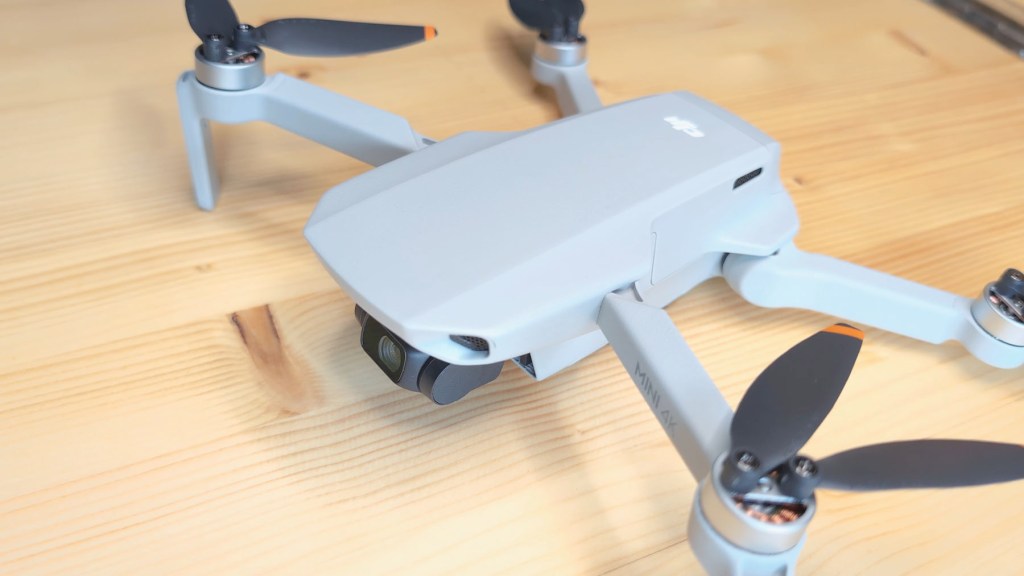

The Mini 4K feels solid in hand despite its lightweight frame. While it’s small, it doesn’t compromise on robustness. The propellers are exposed, which is typical for DJI’s mini series, and it has a moderate wind resistance rating of level five. There’s a three-axis gimbal on the front which keeps the 4K camera stable as you fly.
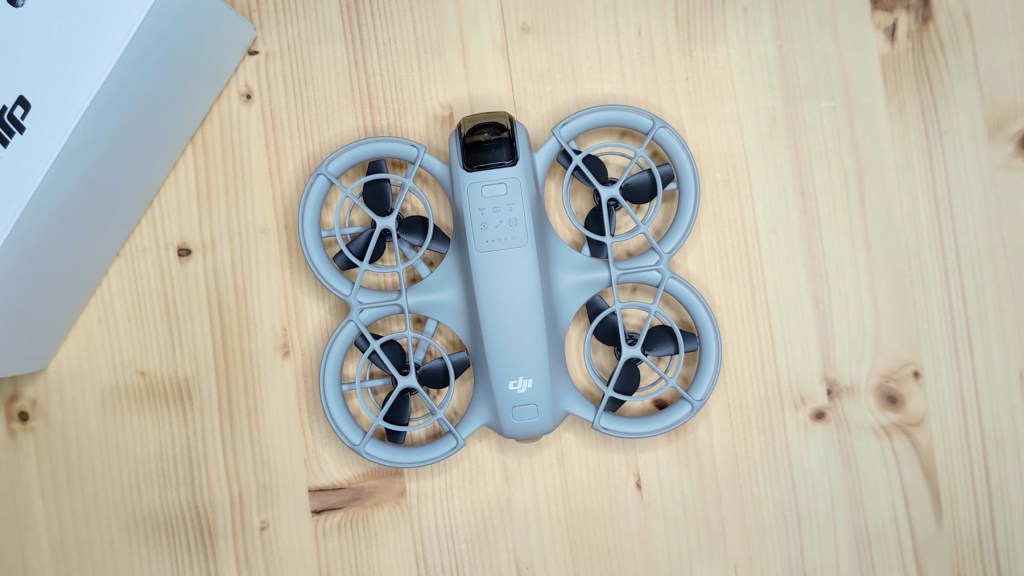
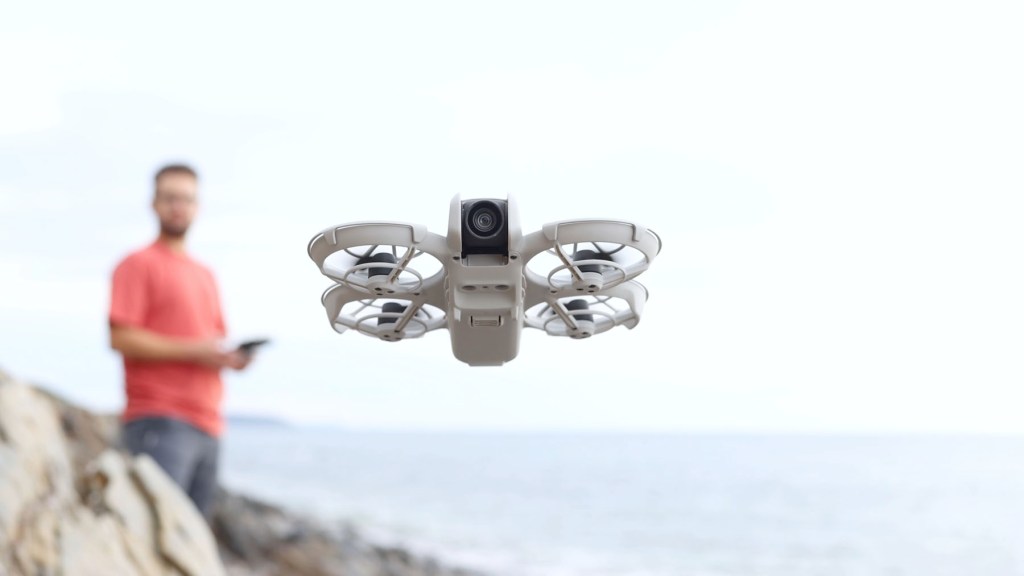
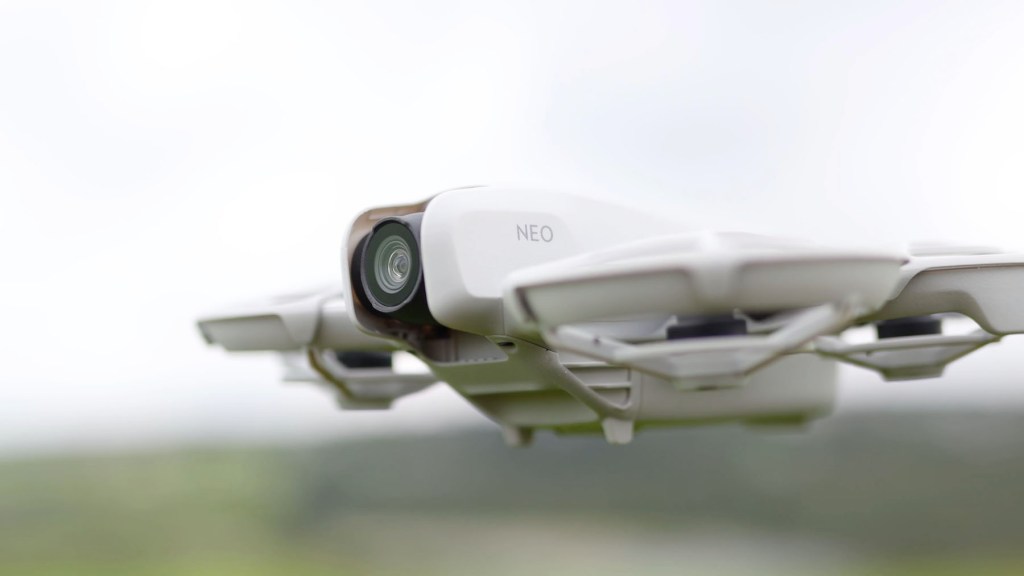
The DJI Neo, on the other hand, takes portability to a new level at just 135g. It’s much smaller, lighter, and more compact than the Mini 4K, comparable to the size of an adult’s hand. The Neo features enclosed propellers, which enhances safety, especially for beginners or when flying around people. Its body has been kept simple, being one solid structure with a single-axis gimbal supporting the 4K camera.

Click to buy your own…
(Affiliate links which help support this blog)
Camera Performance
As its name suggests, the Mini 4K captures video footage at a maximum resolution of 4K at 30 frames per second. This drone uses a 1/2.3 inch sensor and also offers 2.7K and 1080 resolutions at 60 frames per second, giving flexibility of resolution and frame rate.
Its three-axis gimbal ensures smooth and stable footage even when the drone is flying in windy conditions or at speed. This combination of resolution and stabilization is ideal for anyone looking to capture professional-level footage for content creation, personal projects, or travel vlogs.


The Neo also shoots in 4K at 30 frames per second and has a slightly larger sensor compared to the Mini 4K. However, the Neo only has single-axis stabilization and relies on digital stabilization to keep the footage smooth, which it does well even in windy conditions. But due to cropping in on the sensor for stabilization, the overall quality of the footage is reduced a little.


Flight Performance
The Mini 4K offers up to 31 minutes of flight time under ideal conditions, though in reality, this tends to be around 25 minutes depending on wind conditions and flight speeds. The drone can handle winds of up to 24 mph or level five wind resistance. During use, I’ve been impressed with how well the propellers and gimbal handle windy conditions.

Controls are managed through the RC-N1 remote control, which connects to the DJI Fly app for real-time transmission and lots of extra flight settings. The controls are pretty intuitive with three flight modes: sport, normal, and cine. The sport mode delivers higher speed and responsiveness, while normal is the middle speed, and cine mode slows down movements for smooth cinematic shots.
The DJI Neo offers a maximum flight time of 18 minutes, which, while significantly shorter than the Mini 4K, is expected due to its smaller size and lighter battery. The Neo can handle winds of up to 18 mph, which is level four wind resistance, making it slightly less resistant to wind than the Mini 4K.
Click to buy your own…
(Affiliate links which help support this blog)
Control Methods
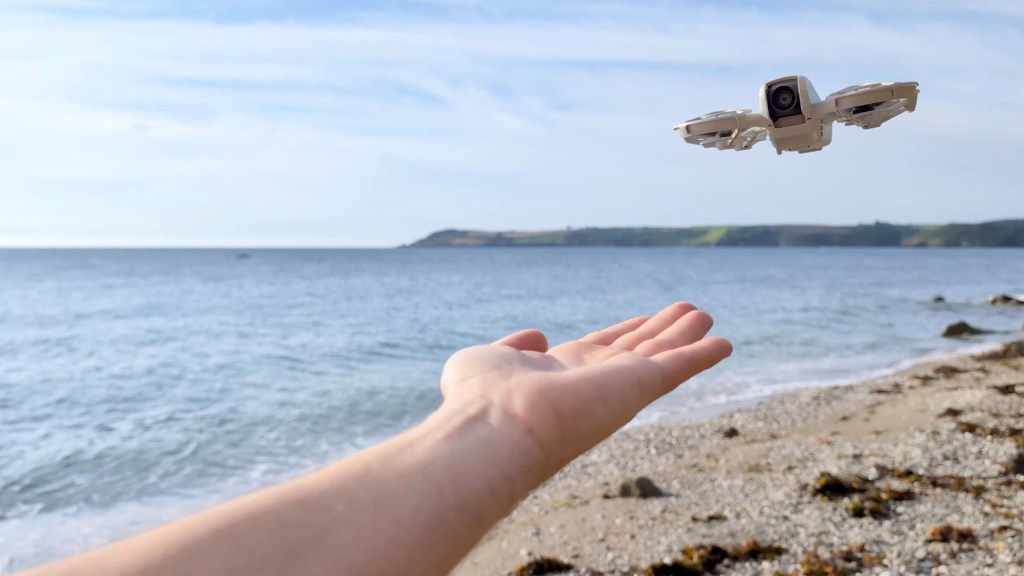
One of the standout features of the Neo is its variety of control methods. You can fly the Neo using the traditional RC-N3 remote, the DJI Fly app on your smartphone, or even through palm takeoff and control, which uses AI to follow you and doesn’t require any external controllers at all. The Neo also supports DJI goggles and RC motion controller, offering an immersive FPV or first-person view flying experience.

We’re also on Instagram!
Check out yogi.the.van to keep up-to-date with all our adventures in the van!


Intelligent Flight Modes
Both the Mini 4K and Neo come equipped with a range of intelligent flight modes but lack obstacle avoidance present on DJI’s higher-end models. The Mini 4K features quick shots, which are pre-programmed flight paths allowing for dynamic shots. These include:
- Droney: The drone ascends backwards while focusing on the subject.
- Rocket: The drone ascends vertically while keeping the camera pointed downward.
- Circle: The drone rotates around the subject.
- Helix: The drone flies in a spiral path around the subject.
- Boomerang: The drone flies in an oval-shaped path around the subject.

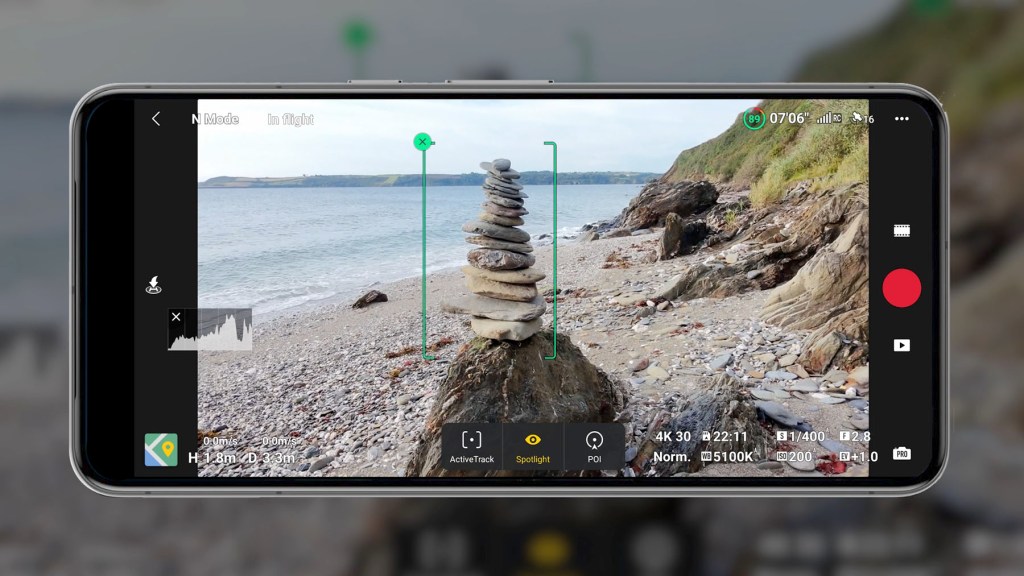
The Neo packs in a surprising number of intelligent flight modes, including the same quick shots as the Mini 4K but also offering follow modes where the drone follows behind the subject and direction track where the drone moves with the subject. There’s also AI subject tracking and automatic footage capture, something that’s not available on the Mini 4K.
Battery Life and Charging
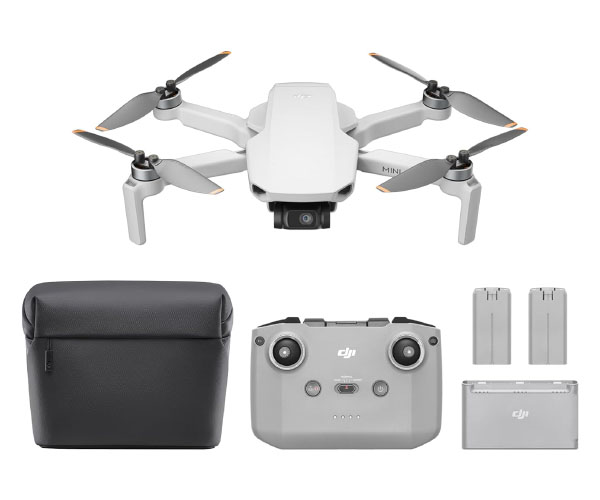
The Mini 4K boasts a flight time of 31 minutes, though real-world performance usually sees this reduced to around 25 minutes. Charging the 2,250 mAh battery takes around 1.5 hours, and with the Fly More combo kit, you get three batteries in a charging hub, which will charge multiple batteries simultaneously.
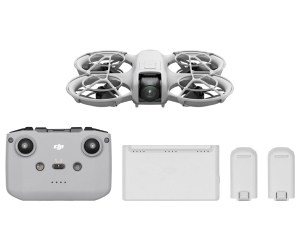
The Neo’s smaller 1,435 mAh battery provides up to 18 minutes of flight time, with real-world usage generally offering around 15 minutes. Charging is fast, taking just an hour. Like the Mini 4K, the Neo‘s Fly More combo kit allows users to charge three batteries at once. Neo batteries are lightweight at just 45g and cost about £35 each, so they’re not a burden to carry around.


Click to buy your own…
(Affiliate links which help support this blog)
Pricing and Value
The Mini 4K is priced at around £275 or $350 for the base model and around £390 or $449 for the Fly More combo. It offers incredible value for those seeking a drone with a high-quality 4K camera, robust flight performance, and decent battery life. The Neo is DJI’s most affordable drone, coming in at just £169 or $199 for the base model, with the Fly More combo priced at £299 or $289.
Conclusion
Both the DJI Mini 4K and DJI Neo are fantastic drones to fly. The Mini 4K is perfect for those looking for a more traditional drone with excellent camera quality, longer flight times, and more manual control options. It’s ideal for beginner to intermediate pilots who want to focus on capturing high-quality video and photos without breaking the bank.
The Neo, on the other hand, is better suited for beginners or casual users who want an easy-to-use, ultra-portable drone. Its palm takeoff feature, AI tracking, and affordability make it a fun and versatile choice for travel, family outings, or content creation. If your priority is professional-grade footage and extended flying sessions, the Mini 4K is your best bet. But if you’re after a lightweight, innovative, and user-friendly drone for casual filming, the Neo will more than meet your needs.

If you’re interested in getting either drone for yourself, I’ve got affiliate links to both of them and all sorts of accessories in the description below. If you’ve enjoyed this content, please like it and subscribe for more insights!
Click to buy your own…
(Affiliate links which help support this blog)
 The Tiny Camper Van